An honest, detailed comparison of Cartagena's neighbourhoods for visitors — atmosphere, noise, beaches, getting around and who each one suits best.
Choosing where to sleep in Cartagena shapes your whole trip. The city is compact, but its neighbourhoods feel completely different: colonial streets inside the old walls, a lively artistic quarter just outside them, and a modern strip of high-rise towers along the beach. Pick the wrong one and you may spend your evenings in taxis, or lie awake listening to music until 3 a.m.
We host guests in two apartments inside the walls all year round, and the same questions come back every week. Here is our honest answer, neighbourhood by neighbourhood.
At a glance
- Walled City – Centro: historic, beautiful, lively day and night. Best for a first visit.
- Walled City – San Diego: historic and quieter, more residential. Best for couples and families.
- Getsemaní: bohemian, street art, nightlife. Best for night owls and younger travellers.
- Bocagrande: modern towers on the beach. Best if a beach at your door matters most.
- Manga, Crespo and others: residential, practical, less atmosphere.
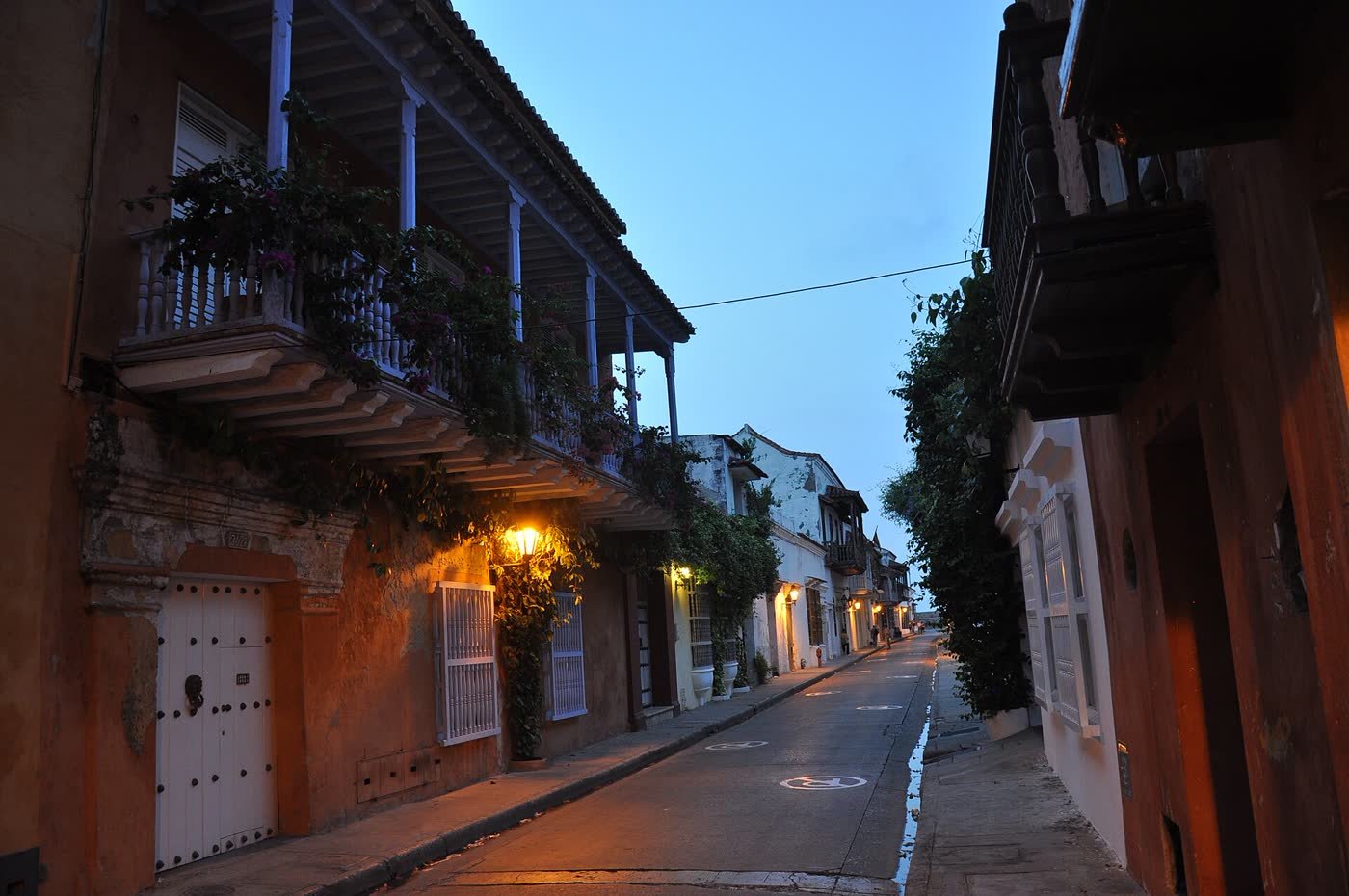
The Walled City: the heart of Cartagena
The historic centre, enclosed by its colonial walls, is the image of Cartagena everyone has in mind: wooden balconies covered in bougainvillea, colourful façades, shaded plazas and old churches. Together with the fortresses that protected the bay, it is listed as a UNESCO World Heritage Site since 1984.
The great advantage of staying here is simple: almost everything you came to see is within walking distance. You can explore in the cool of the morning, go back to rest during the hottest hours, and walk out again for sunset and dinner without ever calling a taxi.
Inside the walls, two neighbourhoods have quite different moods.
Centro: in the middle of everything
The Centro is the busiest part of the old town, around the Clock Tower, Plaza de los Coches, Plaza de la Aduana, Plaza Santo Domingo and the cathedral. Restaurants, rooftop bars, shops and museums are all here, and the streets stay animated late into the evening.
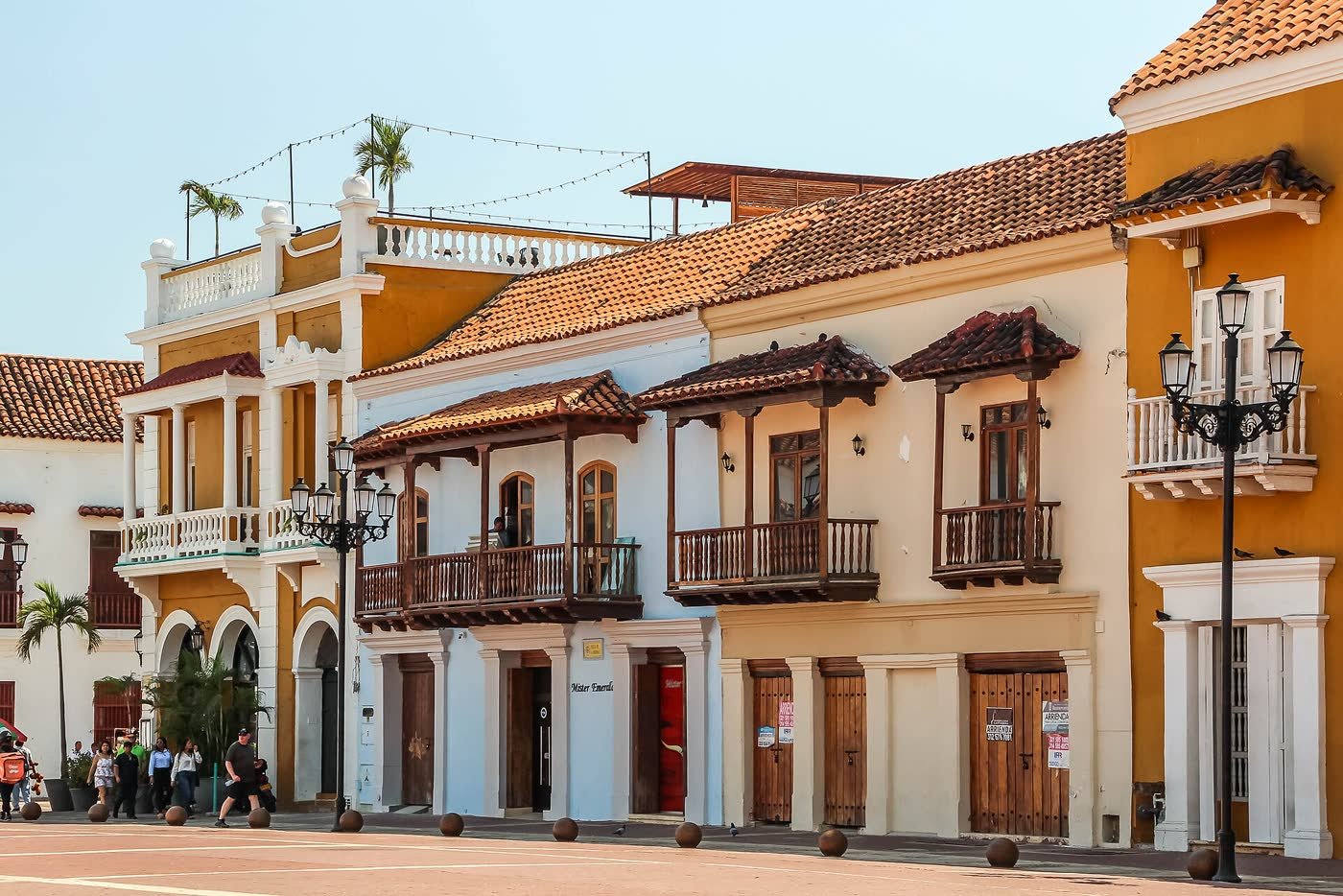
Best for: first-time visitors who want to be at the centre of the action.
Keep in mind: the busiest plazas can be noisy at night. If you are a light sleeper, choose an apartment that does not face a main plaza, or one with good insulation and air conditioning so you can keep the windows closed.
San Diego: the quiet side of the old town
San Diego occupies the northern part of the walled city. It is more residential: smaller streets, local families, cafés, and the pleasant Plaza de San Diego, which comes alive in the evening without the crowds of the Centro. You are still a short walk from Las Bóvedas, the walls, the Santa Clara area and the restaurants around La Serrezuela.
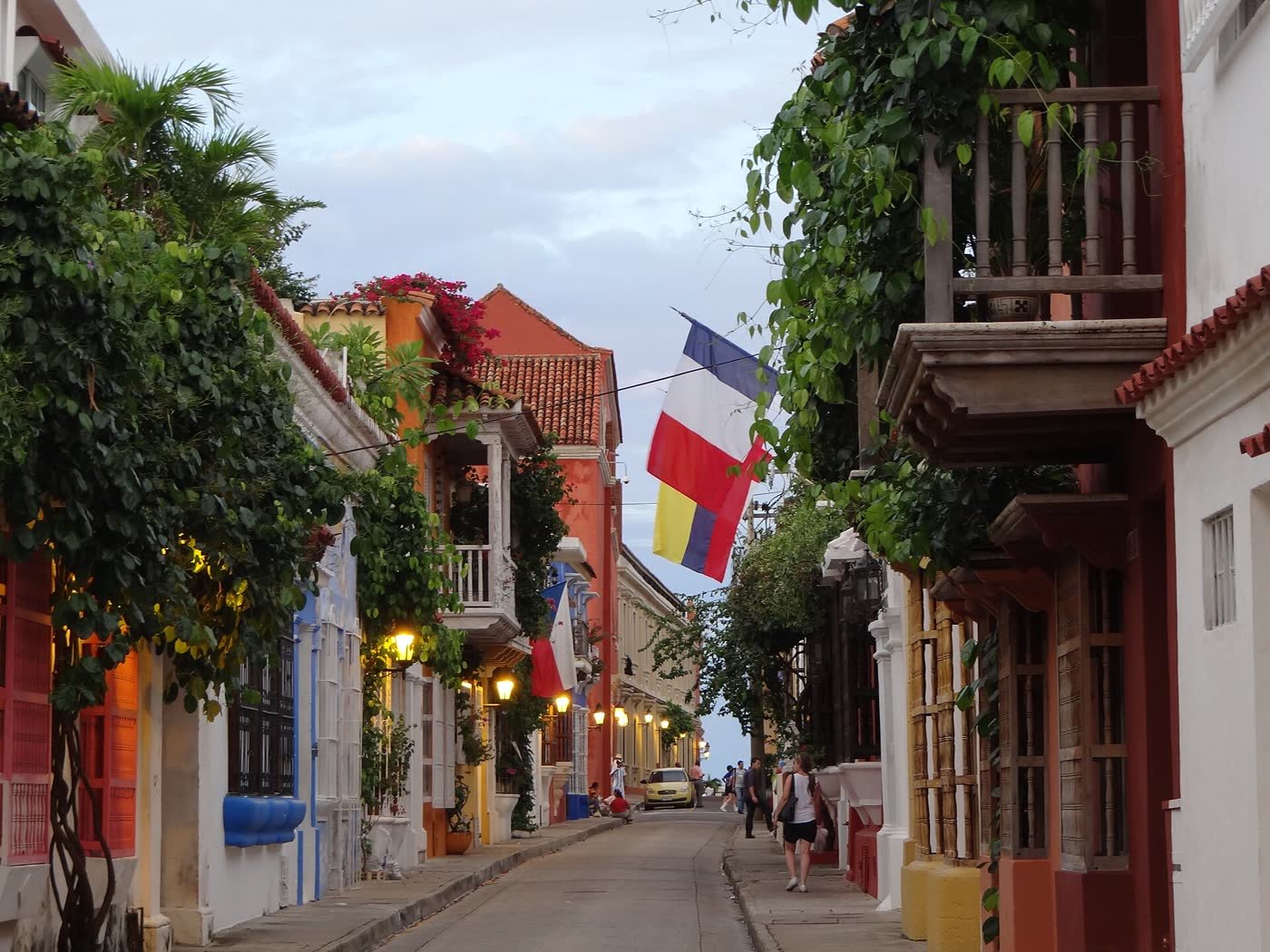
Best for: couples, families and anyone who wants the old town atmosphere with quieter nights.
Keep in mind: you will walk five to ten minutes more to reach the Clock Tower — which is part of the pleasure.
Getsemaní: street art and nightlife
Just outside the walls, Getsemaní was for a long time a working-class neighbourhood. Today it is the creative and nightlife quarter of the city: murals on every wall, colourful umbrellas and flags hanging over the alleys, small bars, salsa, and a young, international crowd. In the evening, locals and travellers gather in Plaza de la Trinidad.
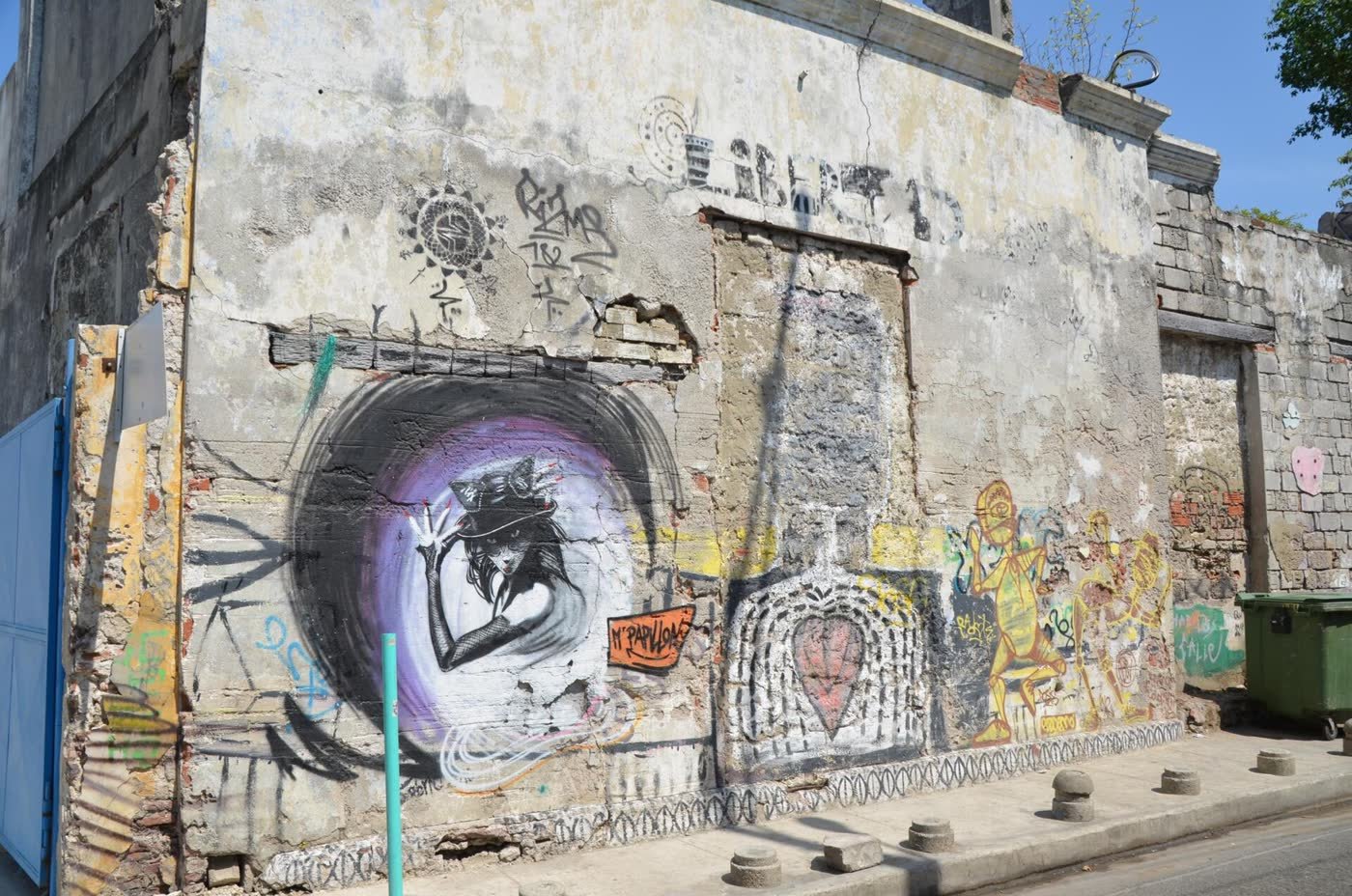
Best for: travellers who want nightlife and a bohemian atmosphere, and backpackers looking for hostels.
Keep in mind: it can be noisy until late, especially from Thursday to Saturday. The Walled City is only a few minutes' walk away, so you can easily visit Getsemaní in the evening while sleeping inside the walls.
Bocagrande: beach and towers
Bocagrande is a peninsula of modern apartment towers and hotels along the sea, a short taxi ride south of the old town. With its avenues, shopping centres and beachfront, it feels more like a seaside resort than a colonial city. Next to it, Castillogrande is quieter and residential.
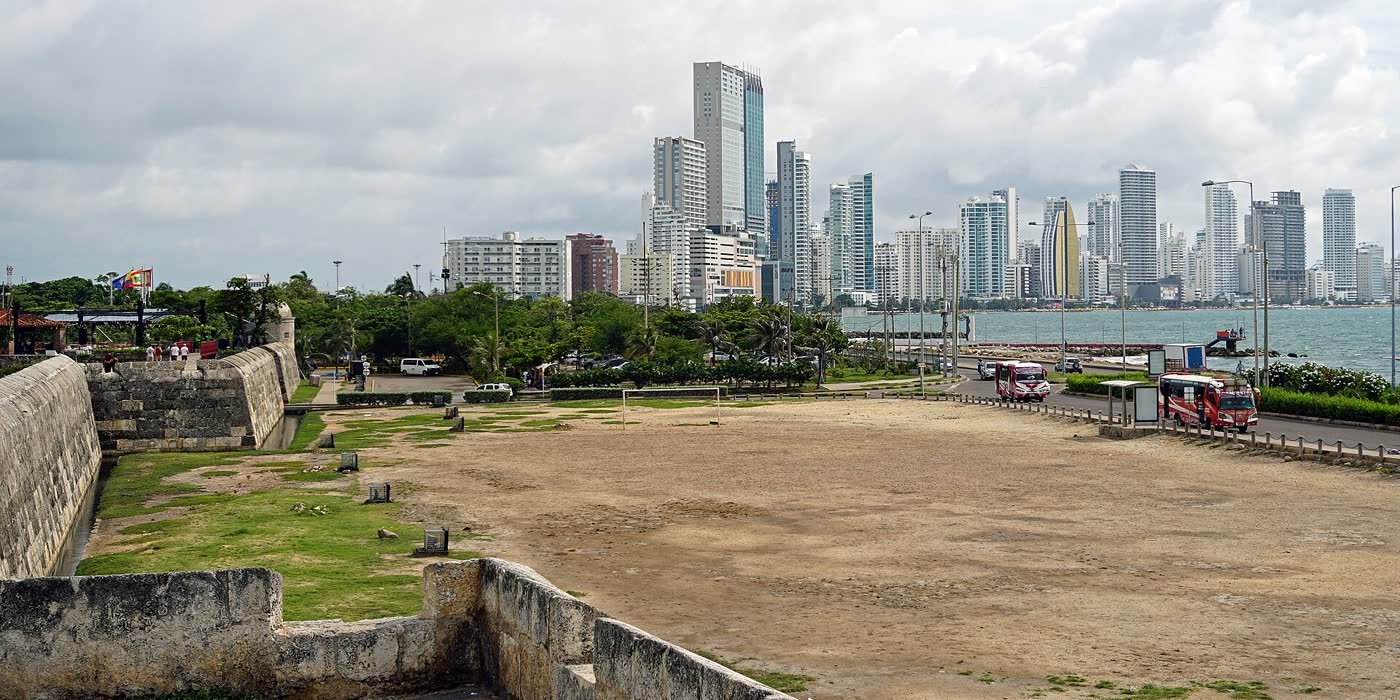
Best for: travellers for whom a beach right outside the door is the priority, and those who prefer a modern building.
Keep in mind: the city beaches are not the most beautiful in the region — the turquoise water is on the islands, an hour or so away by boat. And every evening in the old town means a taxi there and back.
Other areas
- Manga: a residential neighbourhood across a bridge from Getsemaní, with marinas and some beautiful old houses. Quiet, but you will need taxis.
- Crespo: close to the airport, practical for a very early flight, but far from the atmosphere of the old town.
- North beaches (La Boquilla and beyond): resorts and beach hotels, good for a relaxing stay, but 15 to 30 minutes by car from the historic centre.
How to choose
- It's your first time in Cartagena: stay inside the walls. You will spend your days and evenings there anyway.
- You travel with children or as a couple and value sleep: San Diego.
- You want to be in the middle of the action: the Centro.
- You came for the nightlife: Getsemaní, or the Walled City with evenings in Getsemaní.
- The beach is the priority: Bocagrande, or better, a few nights in the old town plus a day trip to the islands.
For more practical information, see the official Colombia tourism guide to Cartagena and the Wikivoyage page on Cartagena).
FAQ
Is it better to stay inside the walled city or in Bocagrande?
For most visitors, inside the walls. You can walk to the sights, restaurants and Getsemaní, and you avoid daily taxis. Bocagrande makes sense mainly if having the beach at your door is your priority.
Is the Walled City noisy at night?
It depends on the street. The main plazas of the Centro are lively until late; San Diego is noticeably quieter. Air conditioning helps, because you can sleep with the windows closed.
Are there beaches in the old town?
No. The nearest city beaches are in Bocagrande, a few minutes by taxi. The most beautiful beaches are on the Rosario Islands and Barú, reached by boat on a day trip.
Is Getsemaní a good place to stay?
Yes, if you enjoy nightlife and a lively, artistic atmosphere. If you want quiet nights, sleep inside the walls and visit Getsemaní in the evening — it is a five-minute walk.
Our two apartments in the Walled City
We host guests in two apartments inside the walls, both for up to 6 people, with two bedrooms, two bathrooms and air conditioning:
- San Diego 203, 135 m² in the quiet San Diego neighbourhood, with a fully private tropical patio, two rooftop pools and private parking.
- Porvenir 206, 160 m² in a restored colonial building in the Centro, with high ceilings, two private patios and a rooftop pool facing the cathedral.
Booking directly with us on WhatsApp costs 10% less than on Airbnb or Booking — same apartment, same team.